
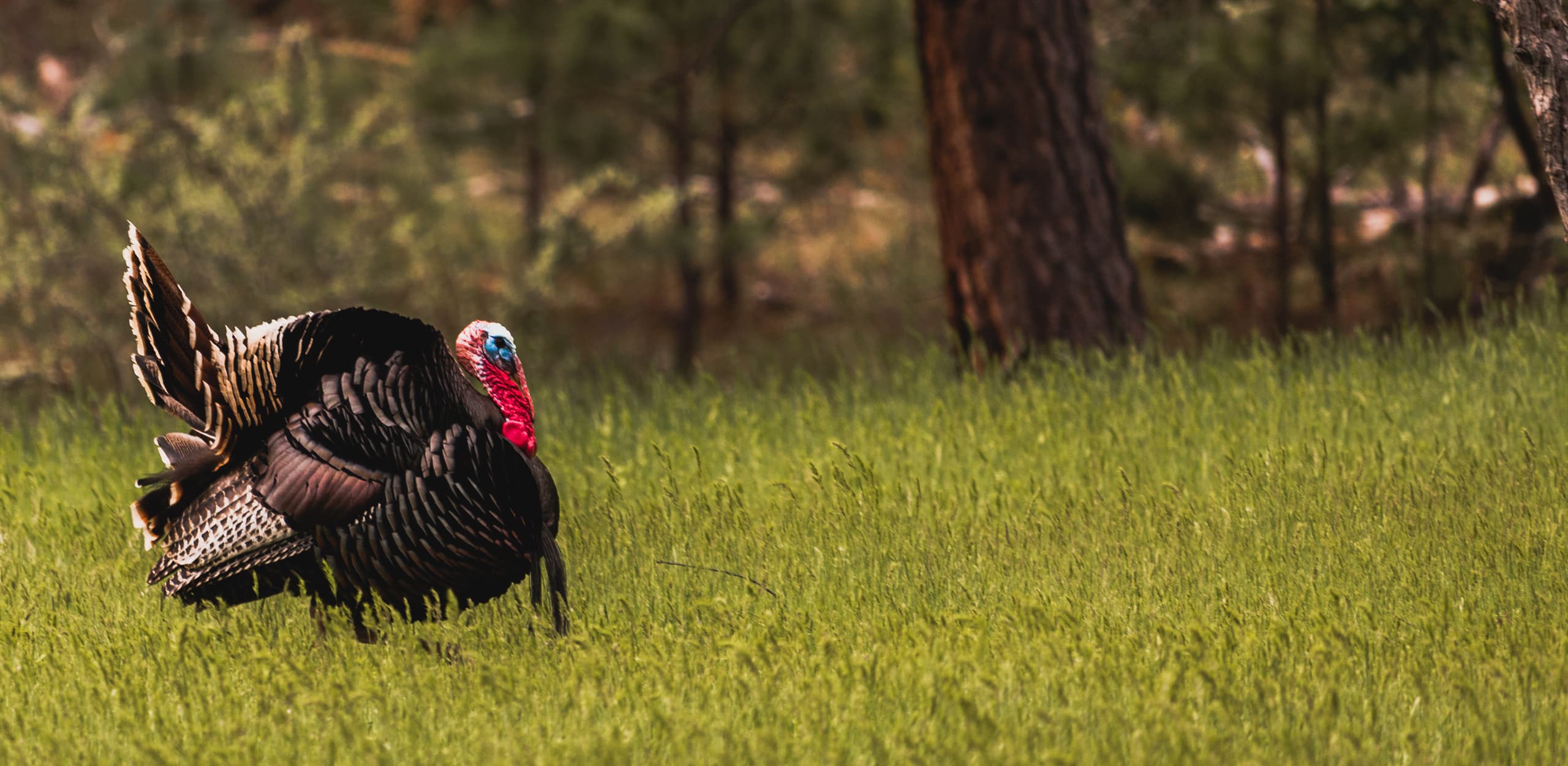
Turkey hunters talk about chasing "the grand slam" the way big game hunters talk about a super slam, but a lot of hunters couldn't tell you what actually separates one subspecies from another, or which one lives where. Here's the breakdown.
The five subspecies
Eastern: the most widespread by far, found in 38 states, mostly east of the Mississippi. Identified by chestnut-brown tips on the tail feathers and black-and-white barring on the wings.
Osceola: found only in Florida. Darker overall than an Eastern, with dark-brown tail tips and wing feathers that are mostly black with only thin bands of white.
Rio Grande: concentrated in Texas, Oklahoma, Kansas, and other western states. Tan-colored tail tips, with roughly equal black-and-white wing barring.
Merriam's: the dominant subspecies through the mountainous West. Lighter overall coloration with distinctly white-tipped tail feathers.
Gould's: the rarest and least-known of the five. Found mainly in Mexico, with limited hunting opportunity in Arizona and New Mexico. Gould's have the longest legs and largest feet of any subspecies, and their tail fans run almost snow-white at the tips.
What "the slam" actually means
Grand Slam: harvesting all four subspecies found within the continental U.S. — Eastern, Rio Grande, Merriam's, and Osceola. Some hunters push further and try to complete it in a single spring, known as a Single-Season Grand Slam.
Royal Slam: a Grand Slam plus a Gould's, which usually means hunting outside the continental four-subspecies range since Gould's opportunity is so limited domestically.
World Slam: a Royal Slam plus the Ocellated turkey, a completely different species (not a subspecies) found in the jungles of Mexico's Yucatán Peninsula — a different-looking, different-behaving bird entirely, and the top recognized achievement in turkey hunting.
There's also a Super Slam, which isn't about subspecies at all — it's harvesting a turkey in all 49 states with a huntable population. Only a small number of hunters have ever finished it.
Why this matters even if you're not chasing a slam
Knowing your subspecies isn't just trivia. An Eastern gobbler in Pennsylvania hardwoods, a Rio Grande working mesquite flats in Texas, and a Merriam's up in Rocky Mountain ponderosa pine don't behave identically — terrain, pressure, and regional gobbling patterns all shift the calling and setup approach that actually works. Knowing what you're hunting is the first step to hunting it well.
As spring season gets closer, we'll be publishing region-specific strategy content for each subspecies — check back as the season approaches.
Informational only. Seasons, bag limits, zones, and draw/tag rules vary by state and change every year — always confirm the specifics with your state wildlife agency before you head out.
Want this dialed in for your hunt?
Gus takes the basics here and makes them specific — your state, your species, live conditions right now. Ask him anything.
Try Gus Free for 7 Days